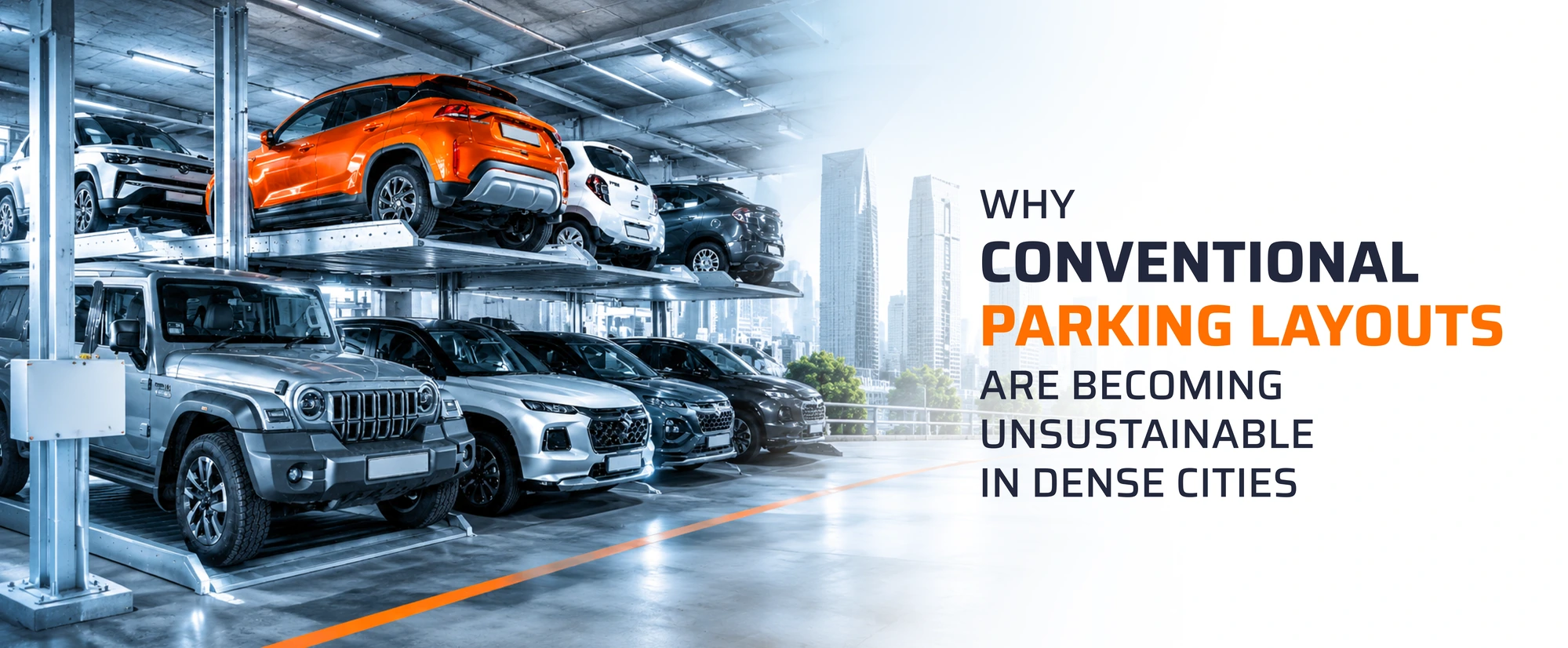
Conventional parking layouts were designed for a time when land was more readily available, and vehicle density was lower. In today’s crowded urban environments, dedicating large areas solely to parking is becoming increasingly inefficient, making conventional parking difficult to sustain in dense cities.
Rapid urbanization has increased the pressure on land availability in cities. Rising vehicle ownership, growing urban populations, and high-density developments have all contributed significantly to a shrinkage in urban spaces. This shrinkage directly affects the parking spaces. Since conventional parking layouts continue to rely on large horizontal areas, it has become increasingly difficult to sustain them in growing urban environments.
Here is where multi-level parking solutions are becoming an essential part of urban development. In contrast to traditional parking, they utilize vertical space. A multi-level car parking system can help accommodate more vehicles within a smaller footprint.
As space constraints become severe and land becomes more valuable, developers are turning to multi-level car parking as a better and more practical alternative to conventional parking.
Some limitations of conventional parking have become visible. Since they use large surface parking lots and expansive basement layouts, and don’t use vertical spaces, they end up delivering less parking capacity while using much more space.
To overcome these challenges, many real estate developments are adopting mechanical parking solutions. Unlike conventional parking, mechanical parking systems use engineered platforms and lifting mechanisms to make use of the vertical space to increase the parking capacity in a structure and maximize the utilization of the available space.
Among the most widely used parking solutions is stack parking. This parking system enables vehicles to be parked vertically, creating multiple parking spaces in conventional parking layouts. This parking system is suitable for developments where the parking demand exceeds available space.
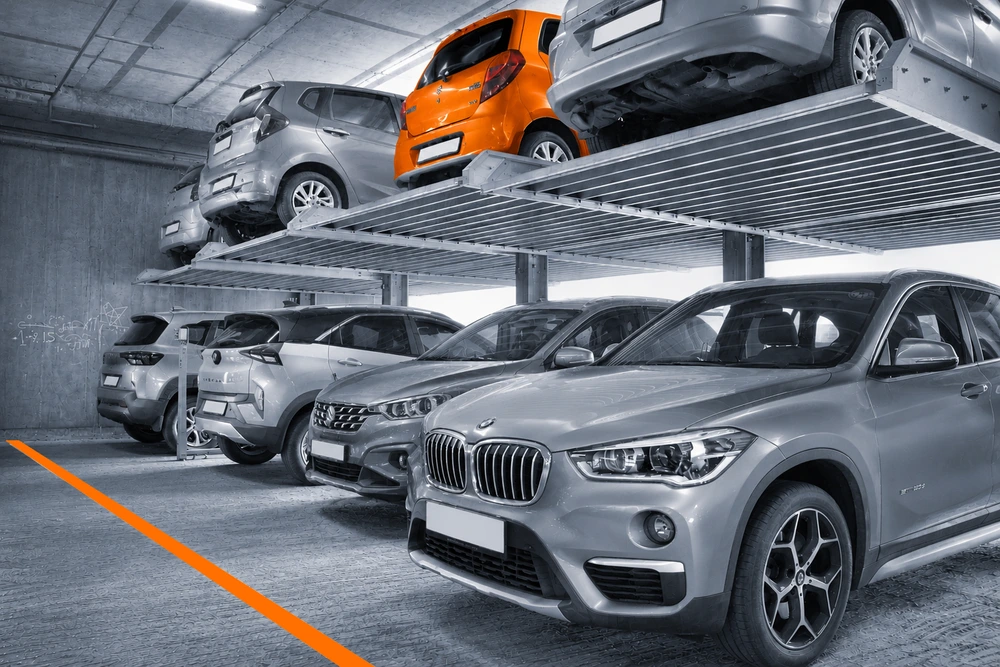
Another popular parking solution is puzzle parking. This parking system uses both horizontal and vertical platform movement to optimize the available footprint. By creating additional parking spaces within a compact area, this parking system is especially useful in urban projects with higher parking demand and limited land availability.
As cities continue to become more crowded, the focus is shifting from simply providing parking to providing more capacity in the same footprint. Conventional parking layouts are struggling to keep pace with changing urban requirements. Solutions such as multi-level parking, multi-level car parking, stack parking, and puzzle parking systems are helping cities make better use of available land.
The future of urban development will depend on the smarter use of space. Efficient parking infrastructure will play a critical role in this transition, making multi-level parking solutions an increasingly important part of sustainable and high-density city planning.