EV Charging

Multilevel Parking Systems for Easier and Faster EV Charging Future

A world where all-electric vehicles (or EVs) dominate the roads is still a dream.

Major car manufacturers in India are also gearing up to announce the launch of electric cars as well as two-wheelers. The Indian government also aims to make our roads free of petrol and diesel cars in the near future.

Electric vehicles, sometimes referred to as EVs, are set to be the next most preferred vehicle, but what does this mean for a consumer?

Most of us don’t own electric cars, but now’s the time to start thinking about how they are going to bring about social and environmental changes.

Advantages of electric vehicles:

  • No fuel, no emissions

EVs can help you decrease your personal impact on the environment through transport. No petrol or diesel is required in a fully electric vehicle, which lowers your carbon footprint.

  • Low running costs

Petrol and diesel prices in India are increasing regularly. An EV can help you save on these costs compared to their fossil-fuel counterparts.

  • Low maintenance

Petrol and diesel engines can require expensive engine maintenance while electric vehicles do not need frequent maintenance.

  • Good performance

As more EV manufacturers are entering the market and providing competitive pricing performance, EVs will soon be a common sight.


As more EVs find their way onto our roads, we will see the supporting infrastructure expand. However, an increasing number of EVs will need more EV charging stations. With the swift rise in demand for electric vehicles, EV manufacturers are focusing on long-range battery vehicles and investing in enhancing the EV charging infrastructure. Setting up charging stations in places where the vehicle is going to be for longer periods of time makes more sense than setting up charging stations at different places. Parking spaces of residential or commercial buildings can be equipped with EV charging points for comfortable charging.

Electric vehicles require compact EV charging solutions that ensure faster and on-demand charging and robust connectivity to support electric vehicles’ current and future needs. In practical terms, this means EV battery recharging needs to be automatic, convenient, and faster than it currently is. Today’s hand-operated battery recharging process requires drivers to park at available recharging stations and physically connect their EV to a large electrical cable. Once plugged in, the recharging process can take hours to complete, which effectively means a loss of time and efficiency.

KLAUS Multiparking has acknowledged that electric vehicles are becoming increasingly popular, the demand for electric charging is growing daily. That demand will almost undoubtedly inflate prices. Considering this, it may be wisest for the consumers to invest in EV charging stations now, before prices increase.

As the global leader in providing cutting-edge parking solutions, we are exploring the possibilities and opportunities to integrate EV charging capability into our multilevel parking systems. We are currently able to provide and integrate EV charging as part of our accessory range. As an innovative multilevel parking system manufacturer, we are also exploring other ways to provide our end-users with simpler ways to charge their EVs while they are parked on our multilevel parking systems.


EV charging stations represent an important move towards building futuristic transportation infrastructure. In order for EVs to gain wider approval, their charging has to become more convenient and efficient and KLAUS Multiparking has taken a huge step towards that by making them available with multilevel parking systems.

EV Charging

Lowering Greenhouse Gases Emissions with EV Charging & Multilevel Parking Systems

As part of its pledge under the 2015 Paris climate agreement, India will seek to reduce its carbon footprint by 33-35 percent by 2030. A large portion of these emissions is contributed by vehicles and the increased focus on electric vehicles (EV) is an effort towards reducing this contribution.

In order to achieve this target, Electric Vehicles and making them common is being considered a significant solution. But what are electric vehicles and how do they work?

EVs run on one or more electric motors powered by rechargeable lithium-ion batteries. Just like electric devices, EVs need to plug into an external power source for charging after being used.

We can assume that just like petrol/diesel pumps, a network of charging stations will be required to give EVs access to power for the road. Because EVs do not rely on fossil fuels, they do not emit any carbon dioxide emissions (CO2), which hugely reduces air pollution as well as decrease our reliance on fossil fuels.

Here’s how EV charging contributes to our goal:

Reduced emissions and smoke:

Traditional engines utilize the combustion of gasoline or diesel which creates energy by generating harmful carbon emissions. Full electric vehicles do not require a tailpipe as their batteries don’t generate any emissions.

Cleaner production:

While electric vehicles may not contribute much to air pollution while on the road, the production of their batteries involved emissions in the past. However, manufacturers of EVs are now mindful of the carbon footprint of production and are setting regulations for manufacturing.

Lesser maintenance:

Conventional engines generate a fair amount of smoke and have significant wear and tear as compared to electric vehicles, saving greatly on maintenance and repair costs.

Reduced noise pollution:

EVs are almost noiseless or generate lesser noise while on the road than their conventional fossil fuel counterparts. This can lead to lesser noise pollution in crowded areas in urban and semi-urban cities.

For India, clean auto technology takes the central stage in its strategy to reduce fossil-fuel dependence and diminish air pollution in its major cities. With millions of petrol or diesel-powered vehicles being driven around the world, greenhouse emissions continue to be a threat. While this is continuing to deteriorate the environment around us, shifting to EVs that are powered by renewable energy may help us maintain a neutral carbon footprint and reduce air pollution to a great level.

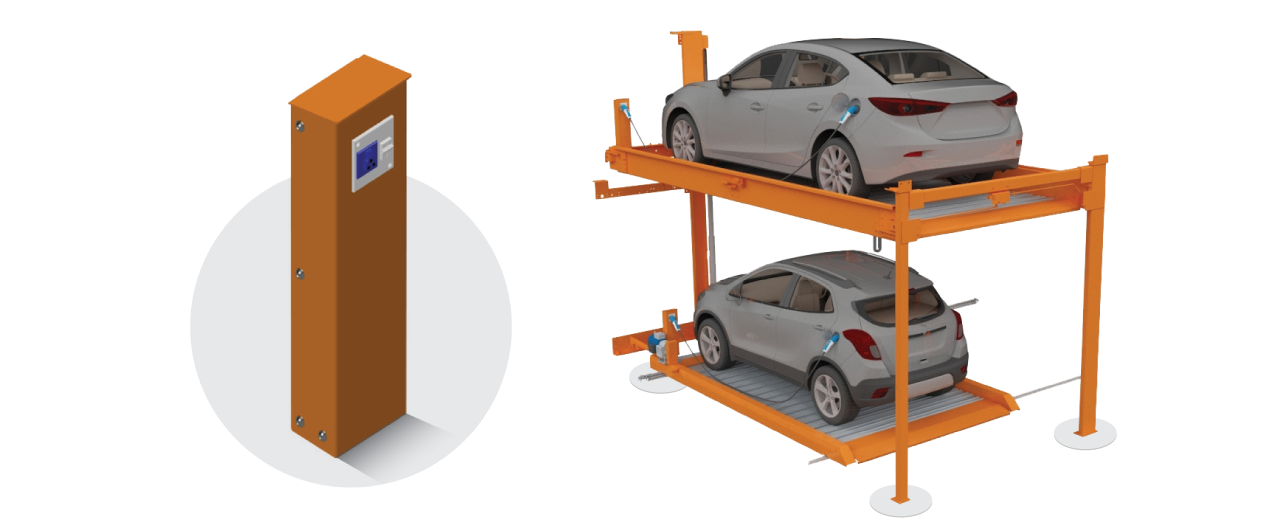
Electric vehicles are seeing a boost in India and KLAUS Multiparking is supporting this transition with its new product – EV Charging Point. KLAUS EV Charging Point enables you to charge your electric cars while they are parked on the platforms of our multiparking systems.

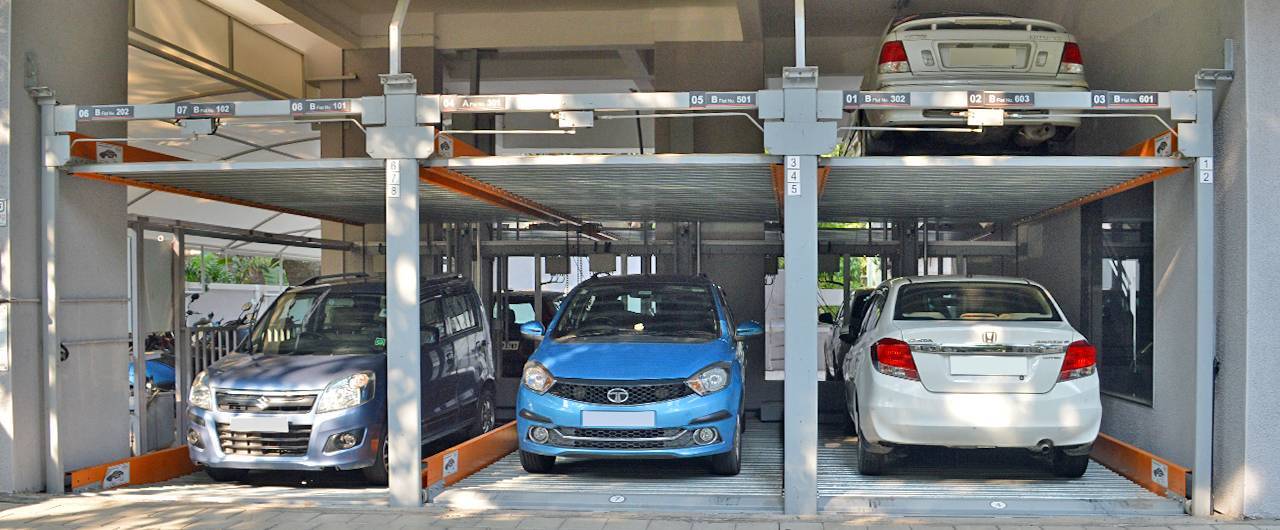
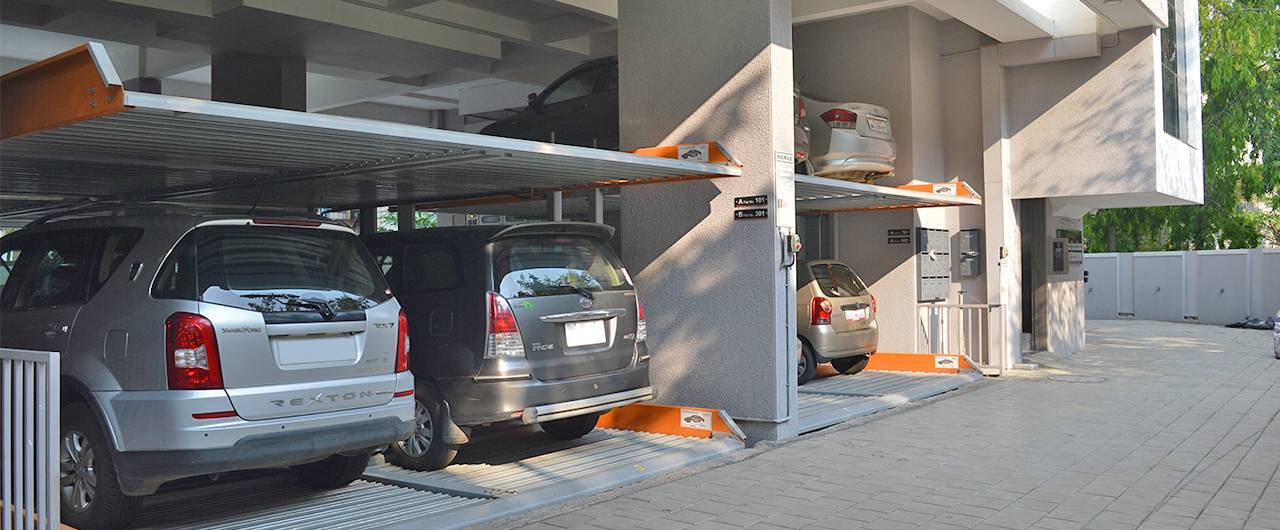
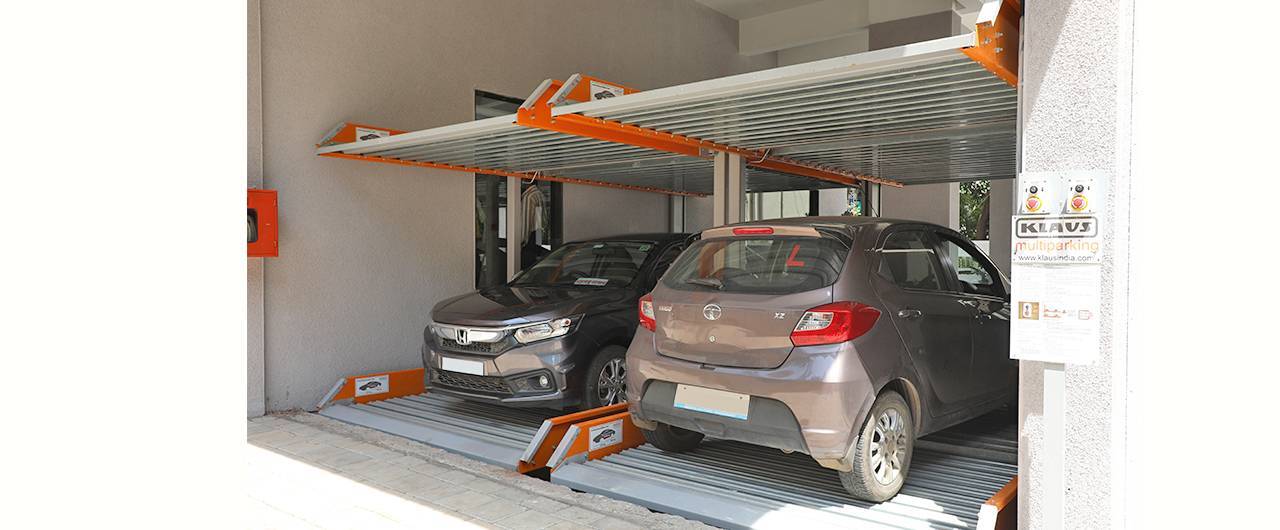
KLAUS Multiparking offers EV Charging Points with its multilevel parking solutions (add-on) which offer the end-user comfort to charge their EV while it’s parked. This saves time and effort to look for charging points outside. People can charge their EVs overnight at residential buildings, workplaces, commercial buildings, and even public places like malls.

Puzzle Parking System - Klaus Multiparkin System

How can Multilevel Car Parking Systems contribute to Reduced Stress on Indian Urban Roads?

The unprecedented increase in the number of personal vehicles and the unorganized road infrastructure have made the cities a hub of overcrowding, traffic congestion, and general unease of parking. This makes parking provision a critical aspect of transportation and town planning. The scarcity of parking spaces in metropolitan cities is resulting in an essential need to find a parking solution to reduce traffic congestion, especially around airports, railway stations, commercial hubs, stadiums, large hospitals, and shopping centers, etc.

Because of the unavailability of planned parking spaces, on-street parking is a prevalent phenomenon in almost all Indian cities, small or big. Not just commercial or transport hubs, several residential areas often face parking scarcity where daily footfall is in several thousand.

Many cars and two-wheelers are seen parked on either side of the roads. Odd-even parking system might have provided a temporary solution to overcome the challenges of overcrowded roads, but people are often seen diverting from the set parking rules, due to the unavailability of safe parking spaces. This greatly reduces the capacity of the road and poses dangers to pedestrians and two-wheeler riders alike.

A lot of researchers have focused on the visual complexity caused by on-street parking and its effect on drivers’ mental states. On-street parking increases the chances of crash risk. On-street parking tends to complicate the entire landscape for drivers, which may affect their perspective and cause crashes. One important reason for risen crash risk is narrowed road width. Parked vehicles leave insufficient space for moving vehicles, pushing them to drive closer to vehicles in the next lane. Researchers have found that clean and organized roads or the absence of extra cards on the sides positively reduces drivers’ mental stress and helps them focus on the road clearly.

While the Indian government is trying to decongest urban roads through the creation of good public transportation, there are restrictions to what difference public transportation can make in Indian cities. Because private vehicles are still a preferred mode of transportation for a lot of Indians, it is imperative to find alternate parking solutions to resolve the issue of road congestions and on-street parking.

Here automated multilevel car parking systems, which utilize vertical space in an efficient way, would provide relief. Although being present in India for a significant time, multilevel car parking systems remain one of the most underutilized parking solutions. Multilevel car parking systems help overcome parking space constraints and regulate traffic flow, reducing the stress on roads.

Multilevel car parking systems are capable of accommodating hundreds and sometimes thousands of cars. Depending on the size, capacity, and type of multilevel car parking systems, they can definitely serve as a reliable parking solution at sites that have medium or high daily footfall.

Due to the use of multilevel car parking systems, traffic flow improves as fewer cars are required to drive around in search of parking. Vehicles are parked safely in the multilevel car parking systems, reducing on-street parking and ultimately reducing crash risk.

KLAUS Multiparking, since its inception in India in 2002, has been contributing significantly to decongest Indian urban roads through its state-of-the-art multilevel car parking solutions. Here are a few of KLAUS Multiparking’s notable achievements in India:

  • Presence: 6 regional offices and 150+ resident representatives across 53 Indian cities
  • Projects completed: 1000+
  • Number of car spaces provided across India: 80,000+ car spaces
  • Largest dedicated manufacturing facility in India spread over: 20000 sq. m
  • Annual capacity: 18000 parking spaces

KLAUS Multiparking designs, builds and installs multiparking systems that not only optimize the utilization of available space but also improve the user-friendliness, safety, and reliability of the parking process. KLAUS Multiparking specializes in dependent and independent stack parking systems, semi-automatic puzzle parking systems, and fully automatic premium parking systems. Along with these hi-tech products, KLAUS Multiparking also offers 24x7x365 maintenance and service facility – Workshop on Wheels. With strong German engineering as its foundation and superior make in India, KLAUS Multiparking is changing the parking scenario in India, one system at a time.

Puzzle Parking System - Klaus Multiparkin System

Walking through the History of Automated Car Parking Systems

Today’s rapid urbanization, increasing number of vehicles and parking space crunch arising due to that have led to the rising popularity of automated car parking systems across the world. Automated car parking systems work on the concept of multi-level parking, where cars are stacked on multiple levels in grids to maximize the number of parking spaces while utilizing the available space in the best possible way.

Contrary to popular opinions, automated car parking systems are not a recent phenomenon. The first version of automated car parking systems appeared in Europe in the early 1900s and in North America in the 1920s. Since then, maximum space and land utilization have remained their goals.

The earliest use of an automated car parking systems can be found in Paris, France in 1905 at the Garage Rue de Ponthieu. The structure included a lift in the center to move up cars one or two levels and there were attendants on each floor to park them.

In the 1920s, a Ferris wheel-like structure called the ‘Paternoster system’ was built to park eight cars in the space of two cars. The structure soon became popular because it was user-friendly and utilized the land wisely.

In 1951, Washington D.C. witnessed its first driver-less parking garage. but the system was characterized by frequent mechanical problems and a long retrieval period. This led to a drop in the demand for automated car parking systems in the USA.

However, automated car parking systems continued to be a preferred parking solution in the other parts of the world including Korea, Japan, and parts of Europe. Advanced automated car parking systems were being designed and installed in Europe, Asia, Central America, and Japan. The concept was very well-received in Japan.

In India, the automated car parking systems entered comparatively late. The country’s first automated car parking system was inaugurated in 2007.

KLAUS Multiparking was one of the first entrants to the automated parking industry in India in 2002, when very few developers or architects were aware of the technically advanced automated car parking systems. But KLAUS Multiparking navigated successfully through all the uncertainties and delivered great projects initially in Bangalore and Mumbai, leading to a strong foundation of trust and expertise.

In the last five years, there has been tremendous growth in both commercial and residential segments and KLAUS Multiparking has grown multifold to support the country’s parking requirement.

KLAUS Multiparking offers the widest range of products ranging from stack parking systems, puzzle parking systems to premium fully-automated parking systems. The KLAUS team guides developers and architects from the early stages of planning to ensure the most suitable parking system is incorporated into the building plan to maximize space utilization.

Considering India’s complex and dense mobility network, the country needs a well-planned focused approach in terms of managing parking spaces. It is high time that India adapts to the pace at which the world is embracing various types of automated car parking systems. With the arrival of EVs, automated car parking systems are also becoming integrated charging hubs of EVs. With the current Government’s focus on infrastructure development, India seems to be the right time frame for transitioning towards a smart parking country. All we need to do is to understand the benefits of the automated parking technology and adapt it to control the increasing chaotic mobility network thriving on Indian roads.

It is truly time to make the manual and unreliable parking lots history and move towards futuristic and reliable automated car parking systems. KLAUS Multiparking is all set to help you make this transition.

Puzzle Parking System - Klaus Multiparkin System

How Multilevel Parking Systems Benefit Cities?

Cities everywhere are matchmakers. They match workers with jobs, students with education services, citizens with health services, and people with people. All this needs space. Cities are expanding at a rapid pace and to accommodate the increasing urban population, cities need to think bigger.

Today, cities are acquiring the capabilities and responsibilities to form, define and stimulate national economic and social growth. To maximize their impact, it is important they are decongested, comfortable, and appropriately planned.

In overcrowded urban areas in India that face a scarcity of space, drivers often have no option but to park on roads or in spaces reserved for other uses or sometimes even on sidewalks. This shortens available space, hindering the free flow of traffic and raising the probability of road accidents.

How can cities overcome the challenge of insufficient space for parking? A feasible parking solution is to construct multilevel parking systems by employing vertical space to correct use rather than utilizing horizontal space.

What are multilevel parking systems?

The concept of multilevel parking is quite old, but it gained momentum in recent years due to rapid urbanization and the increasing crunch of parking space due to that. In simple terms, a multilevel parking system is a semi-automatic or fully-automatic parking facility that allows many cars to be parked on various levels. The thought behind building a multilevel building is to optimize the existing car parking space and utilize vertical space that is widely available in cities.

What are the types of multilevel parking systems?

Multilevel parking systems come in variable sizes according to the building’s parking requirements. However, they are widely categorized as dependent/independent stack parking systems, semi-automatic puzzle parking systems, and fully automatic parking systems which further include lift & shuttle, tower parking systems.

How can multilevel parking systems benefit Indian cities?

Multilevel parking systems can ensure optimum space utilization as multiple cars can be parked in the same amount of space. They are characterized by lower installation, maintenance, and operational costs. Multilevel parking systems help reduce CO2 emissions as users don’t need to drive around to find a parking spot. Multilevel parking systems operate at low dB levels and therefore are noiseless. One of the most crucial benefits of multilevel parking systems is that by parking in specified areas, cars are parked appropriately and safely, roads are decongested, reducing traffic congestion. There is more space left for public spaces, gardens, and amenities. Multilevel parking systems are already being used at many buildings in India such as metro stations, shopping centers, commercial hubs, and residential buildings.

KLAUS Multiparking is an originally Germany-based multilevel parking systems designer, manufacturer, and installer. KALUS multiparking systems are ingenious parking solutions that offer users ultimate safety, comfort, and a very easy parking experience.

KLAUS products range from dependent and independent stack parking systems, semi-automatic puzzle parking systems to premium fully-automatic parking systems.

As the space in urban and semi-urban areas becomes more limited, traditional parking garages or lots are proving to be unsafe and time-consuming. Multilevel parking systems are a parking solution that is feasible, secure, and convenient. Such advanced systems need to replace conventional parking lots to ensure optimum utilization of urban spaces and make way for the growing population.

Puzzle Parking System - Klaus Multiparkin System

An Overview of Multilevel Parking Systems and Their Types

The ever-growing population of India has created many difficulties – one of the challenging ones being car parking which we confront almost every day. Besides the problem of space for cars moving on the road, greater is the problem of space for the cars that remain parked for most of their time. Roads are being built for mobility, but do we have enough space to park the cars? While residential projects are still designed with keeping in mind the parking requirements, the real problem lies with commercial spaces – many a time which is solved by parking on the road or taking up extra open spaces.

Multilevel Parking systems, for some time, have provided relief since they come with a number of advantages – maximum utilization of the available space, lower maintenance and operational costs, reliable and environment-friendly nature, comfortable for end-users, etc.

Multilevel parking systems are normally installed in commercial establishments, complexes, malls, multiplex, residential apartments, hospitals, hotels wherever there is a critical shortage of parking space. The suitable parking system type and dimensions need to be analyzed in the planning stage of the building. Proper planning combined with the best feasible solutions can work wonders for the buildings which have a huge footfall, and thus scarcity of parking spaces.

Even though multilevel parking systems are gaining momentum in Indian cities, it is expected that it will take some time for people to absorb the technology and understand the advantages. There are various types of parking systems and users are going through a learning process to find out the best possible systems. Here are some of the broad categories:

Stack Parking Systems:

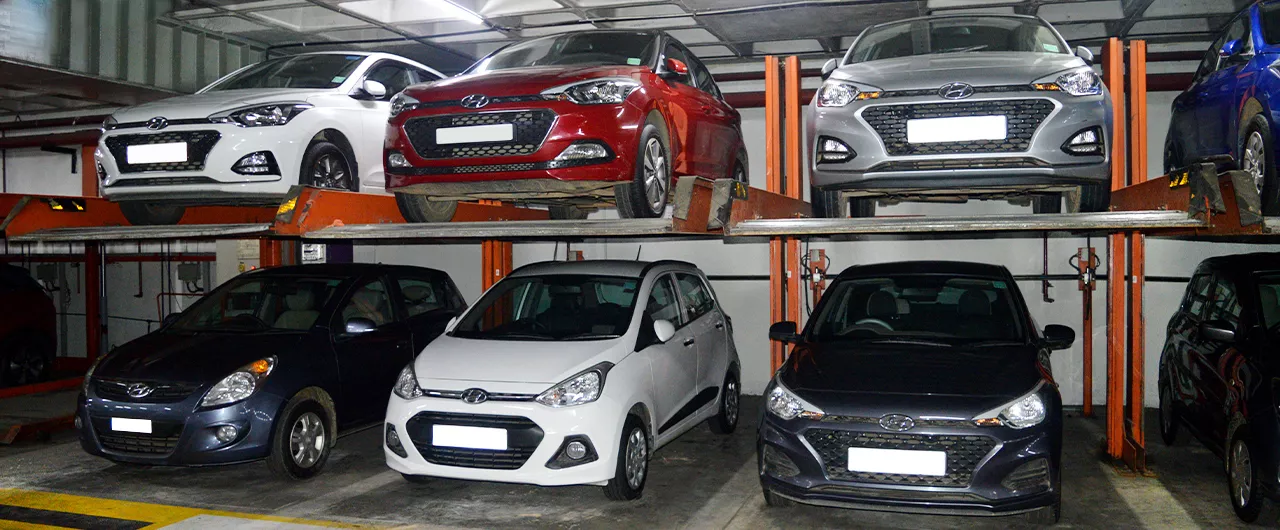
Stack parking systems are multilevel parking systems that stack one or more vehicles one above the other. The stack parking systems stacks cars above or below the ground or combination of both in a parking space. This allows proper utilization of vertical space in parking areas that would normally go unused and park two or more cars in a space that would normally fit only one car. Stack parking systems achieve this with moving platforms that can be raised or lowered. Cars can be parked on the platforms and continue to be stored on them safely as operators lift them to make space for more cars to park below. Stack parking systems can be further divided into – dependent and independent stack parking systems.

Puzzle Parking Systems (Semi-automatic Parking Systems):

Semi-automatic or puzzle parking systems are multilevel parking systems where access to any platform is at ground level by default. Users have to park a car manually on a platform. Once the car is settled, the system checks that it has been properly parked with the help of sensors. The platforms are raised/lowered and moved horizontally to transport the vehicle at desired position. Puzzle parking systems often come in many variations of size, capacity, and type.

Fully-automatic Parking Systems:

Fully-automatic parking systems are multilevel parking systems that do not need any manual help to park a car within them first before activating. The user only needs to interact with the system through operator panel located at the parking area’s entry room. From there, the system takes over, moving the car and finding a suitable spot for it. Fully-automatic parking systems come in various types such as Tower Parking Systems, Multilevel Circulation, Lift & Shuttle System, Quad Vario (Chess) System, and many more.

KLAUS Multiparking specializes in designing, manufacturing, and installing high-quality stack parking systems, puzzle parking systems, and fully-automatic parking systems with a variety of options for architects and builders to choose from. KLAUS Multiparking has introduced many state-of-the-art multilevel parking systems in major cities across India, which is enabling drivers to ease the task of parking. KLAUS multilevel parking systems take less retrieval time, are affordable and environment-friendly since they fit more cars in the footprint of one car. Other advantages include a shorter construction time and a 24x7x365 servicing facility.

In India, the concept of multilevel parking is still restricted to large cities. However, we at KLAUS Multiparking are striving towards making multilevel parking systems a common parking solution in suburban areas which are facing parking challenges as they grow.

Can Multilevel Parking Systems help reduce Air Pollution in Urban Areas?

The World Air Quality report by IQAir, released recently, states that 22 of the top 30 most polluted cities globally are in India. The report also placed India as a country with third worst air quality out of 106 countries in 2020.

Even though sources of India’s air pollution include biomass burning for cooking, electricity generation, industry, construction, waste & agricultural burning, one of the major causes remains transportation. It is now critical to find ways to reduce the pollution caused by transportation.

In India, a lot of vehicles have to drive around unnecessarily to find a parking spot, which contributes a great deal to the emission of pollutant gases in urban and semi-urban areas. Due to the increasing population, Indian roads are becoming more and more polluted because of a lot of vehicles being on move at all times.

The phenomenon of traffic congestion is not limited to metropolitan cities alone but is quite visible in smaller cities as well. Even within a city, there are specific areas which especially face the problem of traffic jams resulting in a huge burning of fossil fuels. To avoid this unnecessary search for a parking slot and prevent fuel wastage, multilevel parking systems can be a useful solution.

The multilevel parking also indirectly supports the government’s mission of encouraging electric vehicles to reduce the pollution levels in Indian cities and make them more sustainable in near future. A multilevel parking system can easily offer electric charging points and that too at a cost that may further encourage people to use electric vehicles. Thus, if we are to move towards electric mobility as much as we can, multilevel parking can be at the foundation of the infrastructure. It will make Indian cities cleaner by physically decongesting them as well as promoting cleaner means of transportation.

A multilevel parking system benefits the environment in many ways. Here are a few of them:

  • More green spaces — Urban green spaces improve surrounding property values as well as actively help to improve air quality in the urban environment. A multilevel parking system stores the same number of cars in a portion of the space required by other traditional parking spaces, leaving more space for urban greenery space.
  • Efficient and usage – Multilevel parking can be built in almost all kinds of spaces. This allows for more efficient urban land use – a crucial component of sustainable city planning and development.
  • Reduced embodied energy — As a multilevel parking system is more compact than a traditional parking structure, it requires fewer resources to build and maintain.
  • Fewer emissions — The slower vehicles run; the more is their emissions of CO2 and other greenhouse gasses. In traditional urban parking, drivers have to search for a space to park and navigate through long parking rows. Multilevel parking systems can reduce emissions by 20-30 percent while saving drivers the frustration of city parking.
  • Better urban air quality — Reduced emissions also mean reduced smoke released from vehicle exhaust that results in cleaner and breathable cities.

Are you looking for sustainable parking solutions?

KLAUS Multiparking is a prominent name in the parking industry, which is present in all the major cities across India. KLAUS Multiparking’s multilevel parking solutions can help you battle and sustainably overcome your parking issues. Furthermore, KLAUS multiparking systems come in variety of options to choose from such as: Dependent or Independent Stack Parking Systems, Puzzle Parking or Semi-Automatic Parking Systems, and Fully-Automatic Parking Systems. These systems can also be chosen in combinations, leaving you with the freedom to choose the most suitable approach in each case. Such variety offers unparalleled performance and and multiple ways to improve operations.

(Statistics Source: https://indianexpress.com/article/cities/delhi/delhi-air-quality-pollution-7231568/)

Stack Parking System - Klaus Multiparkin System

Stack Parking Systems for Indian Urban Areas: Necessity, Usage, and Benefits

India’s urban population has grown to more than 285 million in 2001, close to 28 percent of the total population of the country. Over the last decade, the overall rise in population has been significantly large, about 70 million people.

Such growth naturally presents urban sustainability challenges. One of the most crucial issues rapidly-growing Indian cities face is how to accommodate the huge number of vehicles competing for parking space. In this scenario, long-lasting and efficient parking solutions are of urgent need.

Parking space scarcity limits the scope of land developers who have to struggle to fit many spaces in along with the buildings they are trying to design and construct. Certain commercial buildings or business centers may also grow to the point where their existing parking areas become insufficient for employees and visitors. Fortunately, a solution to these issues can be stack parking systems. In case you are wondering “What is a stack parking system?” read on to find out.

What are stack parking systems?

Stack parking Systems are simple parking solutions to park multiple cars in a footprint of one car. This permits the optimum utilization of vertical space in parking lots that would normally remain unused. Stack parking systems achieve this with moving platforms arranged one above the other. Vehicles can be parked on the platforms and continue to remain on them stably as end-users lift them to make room for more vehicles to park below.

Stack parking systems can be further divided into two categories:

  1. Dependent stack parking system, where the vehicle parked below must be driven out before the platform is lowered.
  2. Independent stack parking system, where the two platforms are connected to each other mechanically and there is no relative movement in between them, so there’s no need to remove the lower vehicle. Most of these systems require a pit one level or two levels below the ground.

5 reasons why stack parking systems is one of the best parking solutions for urban areas:

  • Space-saving: A stack parking system stores the multiple number of cars in less space. Thus a lot of space is saved as compared to a traditional parking. Much space is left for amenities and greenery ensuring a positive impact on the environment.
  • Optimum space utilization: Stack parking systems can be constructed in tight spaces as well. This allows for more efficient urban land use, which is a crucial factor in city planning and development.
  • Easy customization: Stack parking systems are generally customizable according to the available space, which makes them an important tool in keeping the design.
  • Low maintenance: Maintenance of the stack parking systems is necessary for their smooth functioning, but it is inexpensive and does not have to be done very frequently if the systems are used as instructed.
  • Reliability and ease of use: Multiparking systems are built with advanced technology but are very easy to operate and use. They are also highly reliable, where end-users do not need to worry about their vehicle’s safety.

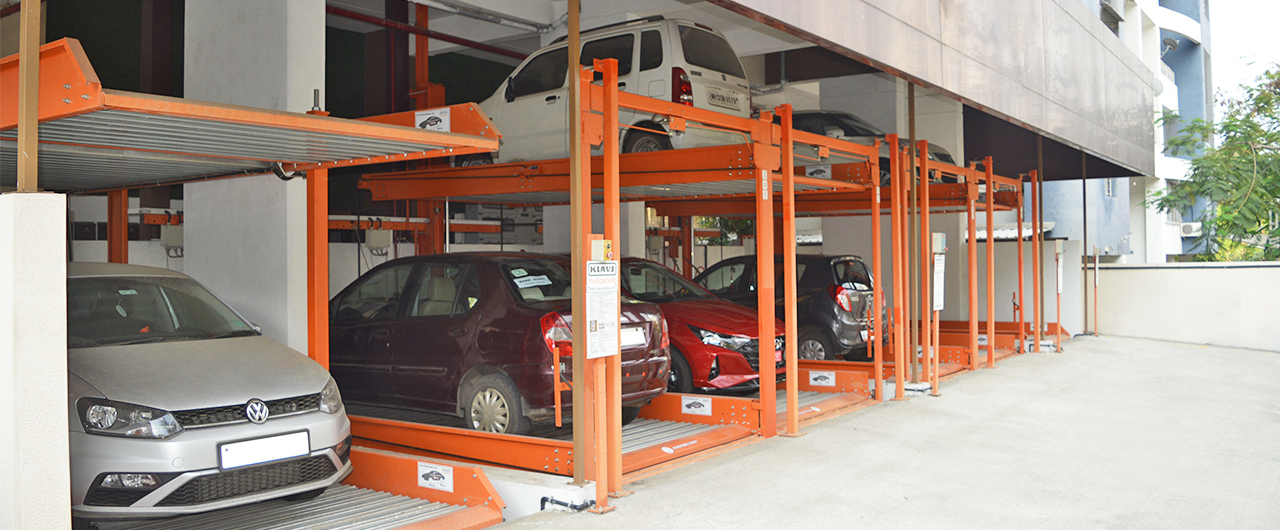
Elaborating on “What is a stack parking system?” also involves exploring its variants that are available. The usual arrangement of a stack parking system consists of a metallic platform, which is supported by two steel pillars on either sides and two sliders mounted on steel pillars with sliding guides. Platform is moved synchronously by a leaf chain and hydraulic cylinder mechanism. These can hold two or more vehicles according to their type.

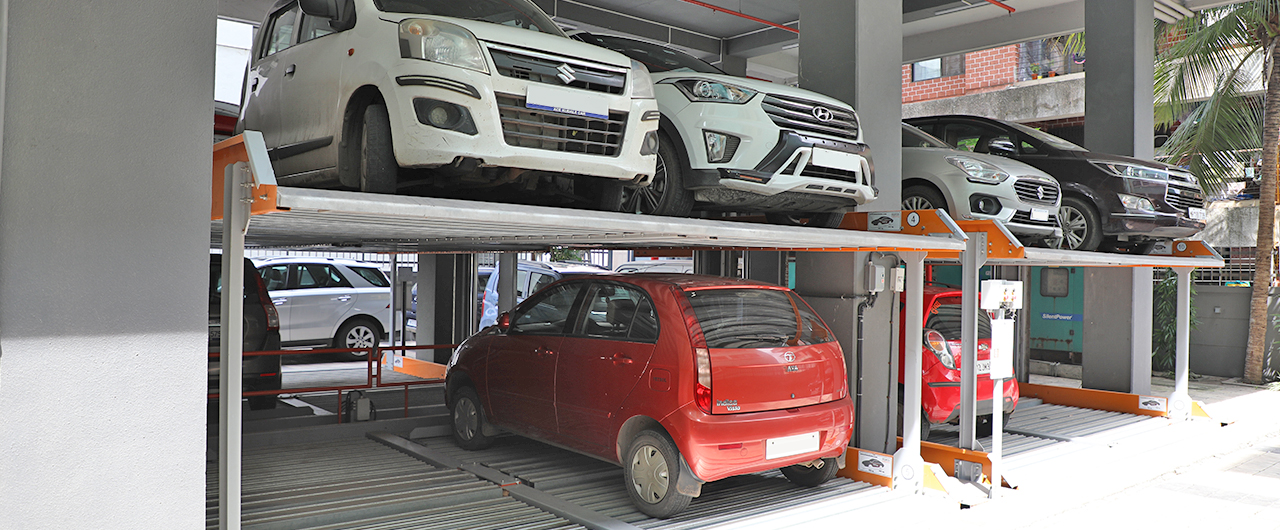
KLAUS Multiparking’s Stack parking Systems are simple parking solutions to park 2 or 3 cars in a footprint of one car. Stack Parking Systems can accommodate all passenger cars ranging between 2 to 2.5 tons. These systems are easy to maintain and reliable.

G 61: This system allows two cars to be parked, one at the ground level and another one on the platform above. The lower car needs to be driven out to use the upper platform.

G 61 M: Similar to G 61 with an additional feature of multiple height adjustment, provided the parking height is available. Cars can be parked, one at the ground level and another one on the platform above. The lower car needs to be driven out to use the upper platform

2062: This is independent parking system that allows 2 cars to be parked. This allows independent retrieval of the top car w/o removing the car below. Both platforms move vertically up and down together. A pit is required one level below the ground level so that the lower platform moves down and enables the upper platform to match the ground level.

3015: This system allows three cars to be parked, one on the lower, another one on the middle and one more car on the upper platform.  A car on the lower platform needs to be driven out to retrieve the car from upper platforms.

G 63: This is independent parking system that allows three cars to be parked, one on the lower, another one on the middle and one more car on the upper platform. A pit is required two levels below the ground level so that the lower and the middle platform move down and enable the upper platform to match the ground level.

How does a Puzzle Parking System help ease space crunch?

How does a Puzzle Parking System help ease space crunch?

Indian cities are a great amalgamation of a wide range of cultures and influences, where taking a turn can feel like stepping into a new world. Although gathering a lot of diverse thing into a relatively small space redefine cities and is one of the biggest advantages of the urban locations, it also creates a substantial challenge for developers. Space is an important element of a city, and developers have to create a perfect balance between the practical needs of their properties and the visions they have for them. One of the most significant examples of this balancing act is parking.

Properties need parking spaces, but traditional parking spaces or garages consume valuable street-level real estate and can have a negative effect on the aesthetics. Traditional parking garages also pose other problems such as public safety concerns and pollution. A significant increase in the number of vehicles over the last decade has also raised questions regarding the availability of enough parking space in the cities to accommodate them. When the traditional parking methods have proved to be ineffective, new advanced technology-driven automatic or semi-automatic parking systems turned out to be the solution for all parking-related issues.

Modern automatic/semi-automatic parking systems have not only efficiently increased the number of parking spots in a limited space but also transformed the parking experience. There are many automatic parking systems available today that provide service according to the parking requirement and space availability. The systems can be easily configured and customized to suit the demands of the customers.

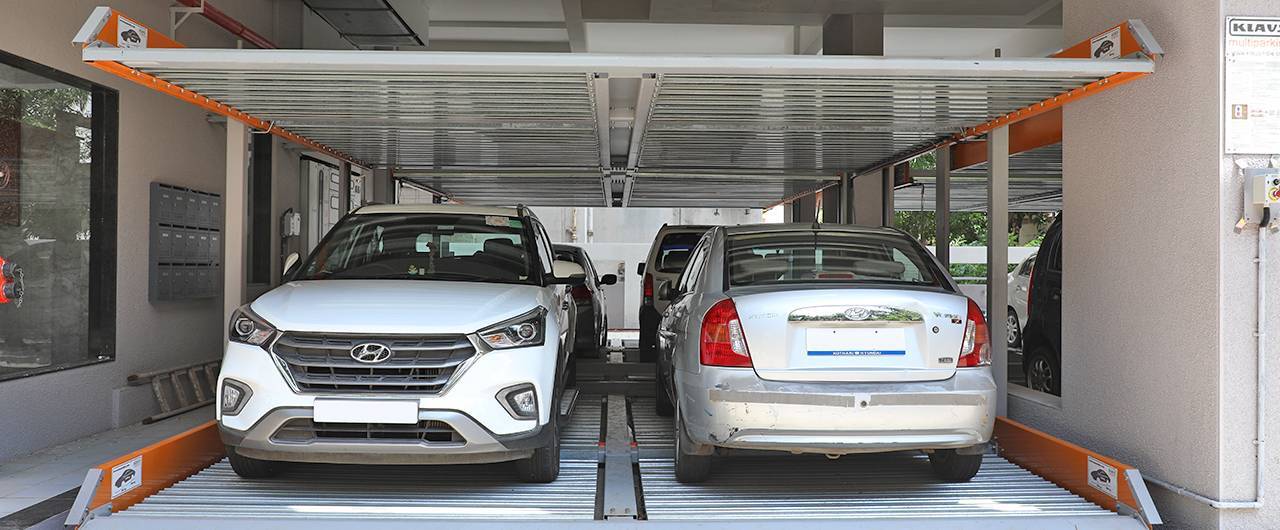
A puzzle parking system is one of the most widely used semi-automatic parking systems that operates like a puzzle, adjudging the available spot for parking. When you call an empty platform, the system brings it to a ground level if it is not present already at the ground level. Access to any platform is at ground level by default. You have to park a vehicle on the steel platform manually in a puzzle parking system once the called platform comes to a rest. Once the car is settled, the system checks that it has been properly parked with the help of sensors.

The platform is raised/lowered and moved horizontally with the help of hydraulic cylinder and chain mechanism till it reaches its predetermined spot.

Some major advantages of a puzzle parking system are:

  • The system makes parking faster and easier as the car can be parked and retrieved quickly without any hassle. This directly negates the commotions caused in the parking area because of an unplanned parking system.
  • The system also ensures the safety of the vehicle. It significantly reduces the chances of theft and damage by minimizing the vehicle’s contact with anything when it is parked in the system.
  • Maintenance of the parking system is very easy. Once installed, the system needs nominal oil changes and cleaning but nothing more than that for long durations if instructions are followed.
  • The operating cost of the parking system is also low that makes the system sustainable in a long-term scenario.

An intelligent puzzle parking system designed by KLAUS Multiparking can fit a lot of cars into a smaller space while offering numerous advantages. KLAUS Multiparking’s best in class parking system – P-310 Semi-automatic Puzzle Parking System is a highly recommended and widely installed puzzle parking system. KLAUS understands the dire situation of traffic and unsafe road parking that has raised due to the limited availability of parking spaces. By making the optimum use of available space and providing ample parking space, the puzzle parking system by KLAUS Multiparking increases the parking spots as much as 3 times when compared to the generally available spaces in a traditional parking system.

KLAUS Multiparking’s P-310 Puzzle Parking System is crafted to provide parking spaces to cars on three levels and side by side. Platforms made of steel pallets that can lift up to 2000 Kg. The vehicles are parked vertically one above the other. The upper and lower platforms move vertically whereas the ground floor platforms move sideways only. This setup coordinates to free up space and park vehicles by moving the car on the platform as per the availability of a parking spot in the system. There is one vacant parking space in the system for it’s apt functioning. The vacant space is used to shift the parking spots. It is very convenient and quick in its operation that allows faster parking and retrieving.

Other than P-310, KLAUS Multiparking also offers P-110 Puzzle Parking System, P-200 Puzzle Parking System as well as KLAUS Over Ground Puzzle Parking System. KLAUS Multiparking has helped a lot of financial institutions, tech-parks, and residential/commercial buildings to maximize their parking space with its puzzle parking solutions.

Keyword used  Avg Monthly Searches Competition Usage in blog
multiparking 40 Low 19 times
parking solution 260 Low 4 times
multi level car parking 590 Low 2 times
car parking system 480 Low 2 times
G-61 | Stack Parking System - KLAUS Multiparking

Myths about Multiparking Systems and why they are not True

As the global population continues to grow and urbanize, it is essential to implement a well-planned and automation-driven parking solution that is also user-friendly and cost-effective.

A multilevel car parking system is a long-term solution available to counter this grave issue as the number of vehicles is bound to increase in the coming years. Multilevel car parking systems are designed with the utmost care and reliable technology that makes them a sound parking solution. However, people still hesitate to opt for them. 

Multiparking systems are being installed all over the world given the benefits that they have when compared to regular parking systems. It is much anticipated that they’re the future of parking systems and yet they’re not very commonly found in some places. The reason for this is the myths regarding multiparking systems. There are several major misunderstandings about multiparking systems that people have, due to which they’re a bit skeptical about installing them. Truth be told, it is very logical and necessary for these systems to be made use of for better utilization of vertical space to cater to the rapidly increasing number of vehicles.

Let’s see what the myths are:

  1. Myth: Multiparking systems are not safe.

Reality: People often believe that multiparking systems might cause damage to their vehicles or the parker. On the contrary, these systems are safe to park and operate as compared to traditional parking spaces, where there are high chances of cars getting damaged accidentally or purposefully. Any potential chances of theft or damages are also very less as the multiparking systems have security doors. 

  1. Myth: Multiparking systems are often unreliable.

Reality: Multiparking systems are built with the use of optimum technology. There are many sensors, mechanical and electrical components that make the system reliable provided the car is parked properly according to standard dos and don’ts. Once the system is installed, with regular maintenance there are usually no issues with the system.

  1. Myth: Multiparking systems cost a lot to install and maintain. 

Reality: Multiparking systems do come with a significant cost but they also come in various options. There is a wide range of parking systems and manufacturing companies in the market and it can vary how much a specific system or project will cost, these types of systems tend to be more economic. Even though the initial cost may seem a bit higher, their reliability and high uptime pay off in the longer run.

  1. Myth: Multiparking systems face a lot of downtime and need frequent maintenance.

Reality: There are a few misconceptions that even after the installations are done, there is a regular requirement for maintenance which costs as much as the installations over time. But this is not at all the case. Maintenance is necessary but it is in fact inexpensive and does not have to be done in between small timeframes if the systems are used as instructed. If the systems are handled responsibly, irregularities or downtime are very rarely observed.

KLAUS Multiparking is trying its best to bust these myths about multiparking systems and at the same time, it is also trying to create awareness about the reliable design and functioning of these systems through various media. It is time people understand that this is the future of the parking systems and it is only rational to install them for better usage of space. 

KLAUS Multiparking is leading the way in designing and manufacturing world-class parking solutions with its advanced German technology and flawless engineering. We offer a wide range of multiparking solutions that suit varied requirements. KLAUS Multiparking also offers WoW – a workshop that reaches your doorstep for maintenance. KLAUS Multiparking has been active in India for many years and has been helping to combat parking problems all over the country with its efficient, reliable, user-friendly, and economic parking systems.

Keyword used  Avg Monthly Searches Competition Usage in blog
multiparking 40 Low 19 times
parking solution 260 Low 4 times
multi level car parking 590 Low 2 times
car parking system 480 Low 2 times